You’ve switched shampoos more times than you can count. You’ve done the oil treatments. You’ve stood in the pharmacy staring at medicated bottles with ingredient lists that might as well be written in another language. You’ve tried things that worked for your neighbour, your colleague, your cousin who swears by some home remedy involving fenugreek and prayer.
And yet. The itch is still there. The flakes are still there. The hair that looks great for exactly one day after washing and then slowly gives up on itself — still there.
Here’s what very few people in the hair care world will actually say out loud: if you’ve tried everything and nothing has worked, you’ve probably been treating the wrong thing. Not your hair. Your scalp. And there is a very significant difference between the two.
Your hair is what you see. Your scalp is where your hair actually lives, grows, breathes, and either thrives or struggles depending on the environment it’s in. And for most people, that environment hasn’t had a genuine reset in years — maybe ever. That’s exactly what a proper detox treatment for hair addresses. Not the strands. The source.
So What Is a Detox Treatment for Hair, Really?
The word “detox” gets thrown around so much that it’s started to feel meaningless. Every shampoo claims to detox. Every scalp scrub is a detox now. So let’s be clear about what an actual detox treatment for hair involves — because it’s genuinely different from anything you’ll find on a supermarket shelf.
Think of your scalp like a garden. You water it regularly — that’s your shampoo. But underneath, over months and years of washing and sweating and applying products and breathing in pollution, a dense layer builds up right at the surface. Dead skin cells that didn’t shed cleanly. Sebum that hardened in the follicle opening. Mineral deposits from hard water. Silicones and polymers from conditioners and serums. Residue from dry shampoo and styling products. Layer on layer, wash after wash, until the very passages your hair needs to grow through are partially blocked — and the environment your scalp needs to stay healthy is completely out of balance.
Shampoo was never designed to clear that layer. It cleans the surface — the fresh oil from today, the product residue from yesterday. A real scalp detox goes deeper. It dissolves and removes what regular washing leaves behind, restores the scalp’s natural pH, reopens congested follicles, and gives the whole system the reset it needs to actually function properly.
Most people who’ve had it done describe a very specific feeling afterward: their scalp feels lighter. Cleaner in a way that’s different from post-shampoo clean. Like something that had been quietly pressing down for a long time has finally been lifted.
The Signs Your Scalp Has Been Sending You
One of the saddest things about chronic scalp problems is how quickly we normalise them. An itchy head every day becomes “just how I am.” Dandruff becomes “it runs in my family.” Hair thinning becomes “I’ve always shed a lot.” We stop reading these things as signals and start accepting them as facts about ourselves. They’re not facts. They’re symptoms.
Ask yourself honestly how many of these feel familiar right now:
- A persistent itchy head that flares up in humidity, after sweating, during stressful periods — basically always
- Flaking that returns within days of washing no matter what anti-dandruff shampoo you use
- Hair that’s visibly greasy by early afternoon on the same day you washed it that morning
- A scalp that feels tender, tight, or hot without any obvious cause
- More hair in the shower drain and on the pillow than feels comfortable to count
- Hair that seems thinner, flatter, and slower-growing than it was a few years ago
- A general dullness and flatness that no conditioner or hair mask ever quite resolves
None of those things are inevitable. None of them are simply genetic destiny or bad luck or just how your hair works. Every single one of them is a scalp that’s congested, imbalanced, or inflamed — a scalp that has been asking for proper treatment, not a different bottle on the shelf.
And here’s the part that matters most: all of them respond to the right treatment. There is a very real difference between “I’ve learned to manage this” and “this has genuinely been resolved.” You deserve the second one.
Let’s Have the Honest Conversation About Dandruff
Dandruff carries a shame it absolutely doesn’t deserve. It’s one of the most common scalp conditions in the world, and yet people lower their voice when they mention it, apologise for it, feel quietly judged by it. Before anything else — let’s put that to rest.
Regular dandruff is almost always caused by the overgrowth of a naturally occurring fungus called Malassezia — something every single human scalp carries. It becomes a problem when the scalp environment tips in its favour: too warm, too congested, too moist. It is not a hygiene failure. It is a microbiome imbalance. And in Kerala’s climate especially, with its heat and persistent humidity, that imbalance is incredibly easy to fall into.
Psoriasis dandruff is an entirely different situation and deserves its own moment of recognition. This is an autoimmune condition — the immune system triggering skin cell turnover far faster than normal, resulting in thick, silvery, sometimes intensely itchy plaques. Psoriasis dandruff has nothing to do with how well someone takes care of themselves. It needs real, clinically informed treatment — not coal tar shampoo, not a generic scalp scrub, but a carefully designed scalp detox that lifts the scale gently without triggering inflammation, while actively calming the immune response underneath.
Both types respond genuinely well to proper scalp detoxification. But the approach must be built around which type you’re dealing with — and that starts with a proper scalp analysis, not a guess. The right treatment for seborrhoeic dandruff and the right treatment for psoriasis dandruff are not the same thing. Treating them the same way is one of the main reasons people cycle through products for years and never land on something that actually works.
If You’re in Kerala: Your Scalp Is Up Against More Than You Realise
Kerala’s climate is genuinely beautiful. It’s also, from a scalp health perspective, one of the more demanding environments to live in — and most people here have never connected the dots between the climate and their chronic scalp problems.
The humidity is the most significant factor. For most of the year — and intensely during monsoon season — the air is warm and thick with moisture. That warm, moist environment is almost exactly what Malassezia and other scalp microorganisms need to thrive. If your dandruff and scalp itch get reliably worse between June and September, that’s not coincidence. That’s your scalp’s biology responding to an environment that tips everything out of balance.
Then there’s the water. Hard water — high in calcium and magnesium — is common across much of Kerala, including Kochi. Those minerals don’t rinse away. They bind to the hair shaft and settle on the scalp with every wash, building up over months into a dull, irritating mineral film. It’s one of the things a proper detox treatment for hair — using chelating agents designed for exactly this — is built to address.
And then there’s the oiling tradition — genuinely wonderful for hair length and strength, but worth understanding in this context. Heavy oil applied in a warm, humid climate creates a sealed, warm environment on the scalp that certain fungi actively feed on. The tradition itself isn’t the problem. The combination of oiling, humidity, and a scalp that’s never been properly detoxified is where the difficulty compounds.
This is why finding genuine skin and hair treatment Kerala professionals who understand these local factors matters so much. The most effective scalp detoxification treatment for dandruff in Kochi accounts for the hard water, the monsoon humidity, the seasonal patterns — not just the general science of scalp health, but the specific reality of what your scalp is dealing with every single day.
What a Professional Detox Treatment for Hair Actually Involves
A professional scalp detox is a genuinely different experience from anything you do at home — and understanding what it involves helps explain why it works when everything else hasn’t.
It begins with a proper scalp analysis. Not a glance — a real examination under magnification by someone trained to read a scalp. What kind of buildup is present? Is there active fungal activity? Is the flaking seborrhoeic or psoriatic? Is there follicular inflammation? Is there hard water mineral deposit? These are all different conditions requiring different responses, and no effective treatment can be designed without first answering these questions.
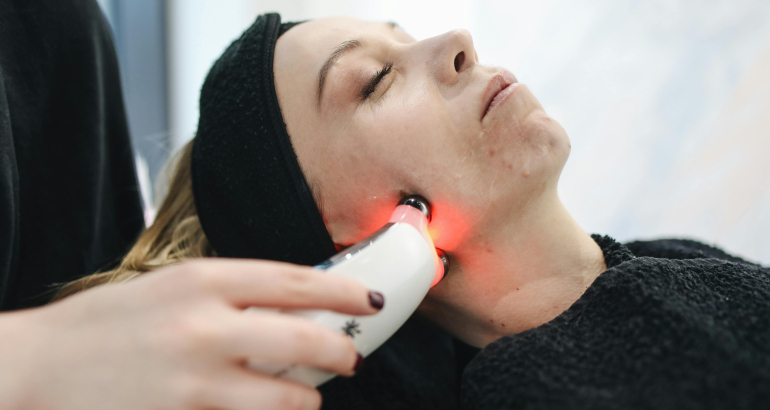
Then steam — sustained warmth that opens the follicles and begins to loosen the layers of buildup that have been sitting there for months. Most people feel a noticeable release during this phase alone — a physical easing of tension they didn’t know they were carrying in their scalp.
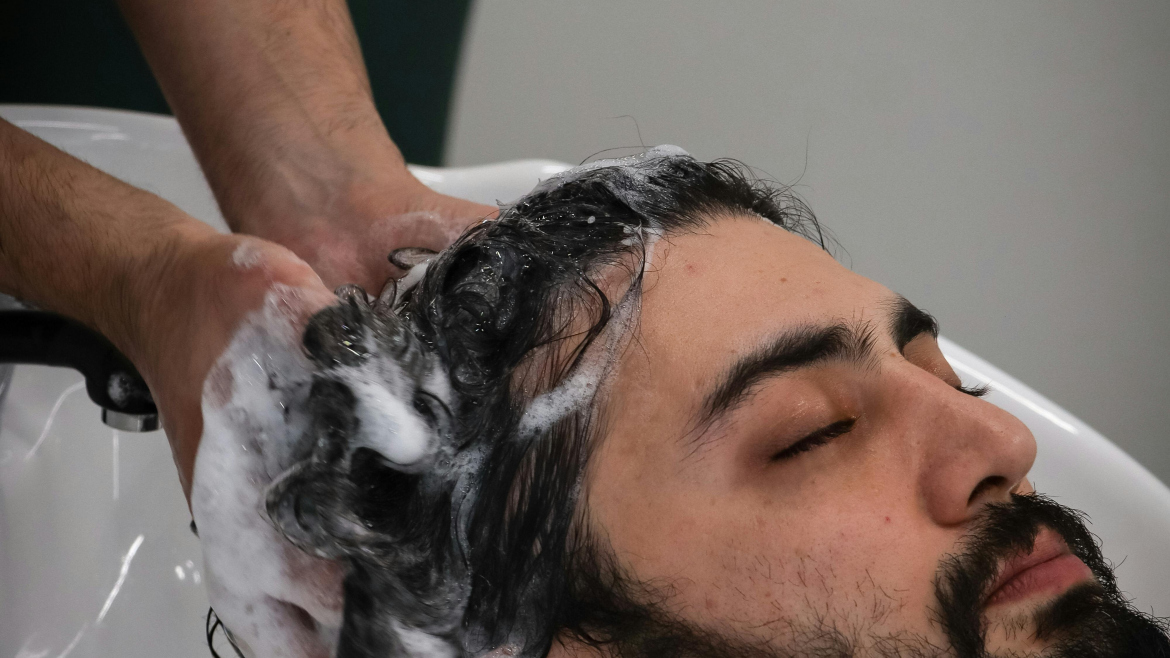
Then the active treatment, formulated specifically for what the analysis showed. Exfoliating acids dissolve the dead skin buildup at the follicle openings. Activated charcoal draws out impurities. Chelating agents lift and remove hard water mineral deposits. Antifungal or anti-inflammatory compounds — chosen for the specific condition identified — do the targeted work they were designed for. All of this is applied carefully, given proper time to work, and then rinsed with a pH-balanced solution that restores the scalp’s natural acid mantle.
And then — nourishment. A freshly detoxed scalp is open in a way it hasn’t been in a long time. Hydrating serums and follicle-supporting botanical compounds are massaged in, feeding a system that’s been starved of proper care. This nourishment phase is what turns a good detox into a lasting one.
The changes people notice afterward aren’t subtle. The itchy head quiets — often within a day or two. Hair looks noticeably shinier and lighter, not because anything has been added, but because the residue weighing it down has finally been removed. The grease cycle slows. Hair stays fresh longer between washes. And over a series of sessions with a proper maintenance routine at home, dandruff reduces, hair fall slows, and growth improves — because the environment hair grows in has genuinely, fundamentally changed.
Stop Managing. Start Actually Fixing It.
There’s a particular kind of exhaustion that comes with managing a scalp problem for years. The daily itch. The shoulder-checks before sitting down. The wardrobe reorganised around avoiding certain colours. The small, constant mental load of a problem you’ve decided isn’t worth fighting anymore because everything you’ve tried has disappointed you.
Managing is not the same as healing. And the scalp problems that feel permanent — the dandruff, the thinning, the slow growth — are almost never actually permanent. They are symptoms of a scalp environment that’s out of balance. Change the environment, and the symptoms change with it.
A scalp detox is not a miracle. But for an enormous number of people, it is the first thing that has addressed the actual problem instead of chasing symptoms in circles — because it treats the scalp, the living skin your hair grows from, rather than just the hair itself.
If you’re in Kerala — dealing with humidity, hard water, and a climate that genuinely stacks the deck against scalp health — regular professional scalp detoxification isn’t an indulgence. It’s just sensible maintenance for a part of your body that affects how your hair looks, how it grows, and honestly, how you feel about yourself every single day.
Book a consultation. Find someone who will actually look at your scalp — analyse it properly, understand its specific situation, build a treatment around what it genuinely needs. Ask all the questions. And then give the treatment enough time to do what shampoo alone was never going to do.
FAQ
I’ve tried every anti-dandruff shampoo on the market. Why is absolutely nothing working?
Underneath this question is almost always: is something seriously wrong with me? In most cases, no. The shampoos are failing for a mechanical reason. Anti-dandruff shampoos suppress Malassezia at the scalp surface — they cannot do this if the surface is buried under months of product residue, hardened sebum, and dead skin. The active ingredient hits the congestion layer and stops. The shampoo is not a poor product. It simply cannot reach what it is designed to treat. A detox treatment for hair removes what is in the way. After it, the same shampoo — nothing else changed — often produces visible improvement within a week. Because now it can actually reach the scalp.
Is my scalp itch just dandruff, or could it be something I should be more worried about?
The real question here is usually: I have been putting this off and I am worried it has become something worse. Worth saying plainly: the conditions that cause a persistently itchy, flaking scalp are uncomfortable and disruptive, but they are not dangerous. What matters is identifying which one you have. Regular dandruff produces small, oily, yellowish flakes and persistent itch. Scalp psoriasis produces thicker, silvery, adhered plaques and skin that is raised and tender to pressure — not just itchy. Seborrhoeic dermatitis is red, scaly, and inflamed, following the oily zones of the hairline. Contact dermatitis produces a localised reaction with a clear boundary. The wrong treatment applied to the wrong condition extends the problem by months. A trichoscope assessment makes the distinction clearly, in about ten minutes, without guesswork.
Will a scalp detox actually help with the hair fall I’ve been noticing?
Often yes — but not always in the way people expect. Hair fall driven by follicle congestion and scalp inflammation responds directly to a detox: the follicle environment improves and the inflammatory trigger for shedding is reduced. Hair fall from hormonal causes, nutritional deficiency, or genetic alopecia will not be resolved by detox alone. What a scalp detox reliably does is clarify the picture: once congestion is cleared and follicles are unobstructed, the actual pattern of hair fall becomes visible and assessable for the first time. Many patients find that what felt like significant thinning included a substantial component of volume loss from the congested scalp itself. The hair fall that remains after a proper detox is the one worth investigating specifically.
How often should I actually be getting a scalp detox?
If the scalp has active symptoms and significant buildup, one session rarely holds — the conditions driving the buildup begin rebuilding before the next visit. Two to three sessions two to three weeks apart establishes a genuinely clean baseline. Once stable, monthly or bi-monthly maintenance usually keeps the scalp below the threshold that triggers symptoms again. In Kerala specifically: the monsoon period predictably stresses the scalp regardless of how well it has been maintained between visits. A session scheduled at the start of the monsoon and again at the end is the most practical way to manage the seasonal pattern — proactively, rather than in response to symptoms that have already returned